
Best Servos for Micro RC Airplanes
Thank you for visiting my blog on the top servos for mini RC planes. I’ll be talking about the many servo kinds that are available for these planes, their features, and what you should consider before buying in this blog. I’ll also offer some advice on how to install and care for your servos correctly.
Any micro RC airplane needs servos because they give the aircraft the control it needs to fly. On the market, there are different kinds of servos, each with special qualities and abilities. The most popular and straightforward to install servo is the brushed DC servo, which is also the most economical. A basic motor, a gear train, and a potentiometer make up this kind of servo. The servo is instructed on how far to move by the potentiometer.
Beginners should use brushed DC servos because they are simple to install and don’t need any special tools. They are only appropriate for tiny planes because to their speed and torque limitations.
The brushless DC servo is a different kind of servo that is more expensive but has more functionality. This particular kind of servo has an encoder, an integrated speed controller, and a brushless motor. Compared to their brushed counterparts, brushless DC servos are more effective, powerful, and offer better control. Additionally, they cost more and demand more setup and upkeep.
And last, there is the coreless servo, the most sophisticated servo design now in use. Since coreless servos lack physical gears, they are more effective and potent than other servo designs. They also cost extra and call for a unique configuration.
Whatever servo type you decide on, it’s critical to make sure it is compatible with your micro RC airplane. Additionally, you want to ensure that the servo you purchase has the power necessary to move the plane in the directions you require. Finally, you should frequently clean and lubricate the servo to ensure that it is taken care of.
How Micro RC Airplanes Use Servos
Any remote control (RC) airplane needs servos to function, but tiny RC airplanes require them even more. We’ll go over servo usage in tiny RC airplanes in this blog post and why they’re the ideal option for this kind of craft.
The numerous components of an RC airplane are controlled by servos, which are compact motorized devices. A dedicated RC transmitter and receiver can operate the majority of servos, enabling users to control their aircraft from a distance. A servo is typically made up of a shaft attached to a control surface, a gearbox, and a motor. Servos may move the control surfaces of an RC airplane to navigate the craft by offering a regulated output of movement.
Servos are very critical for micro RC airplanes. These little aircraft need to be flown with extreme precision because of their size. Due to their compact size, light weight, and capacity to offer precise control over the airplane’s control surfaces, servos are the ideal choice for this kind of aircraft.
It is crucial to use servos that are made for this kind of aircraft while choosing them for a micro RC airplane. There are numerous servo kinds available, therefore it’s crucial to choose ones that are made to handle the particular requirements of a tiny RC aircraft. For instance, servos created for micro RC planes must be light, have a high torque rating, and be able to deliver accurate control over the control surfaces of the aircraft.
It’s critical to make sure that your tiny RC airplane’s servos are installed and maintained correctly in addition to choosing the appropriate ones. To make sure they are in good operating order, servos should undergo routine inspections. Any worn or broken parts should be replaced as soon as feasible. Additionally, to guarantee that they are giving precise control over the control surfaces of the airplane, servos should be routinely calibrated.
In conclusion, servos are a crucial component of any remote control airplane, but they are crucial for miniature RC airplanes in particular. Servos are lightweight and tiny, making them
Questions to Ask Before Purchasing Servos
There are a few important factors that you should keep in mind while buying servos for your tiny RC airplanes. In this blog post, we’ll outline the key considerations you need to make when choosing the best servos for your micro RC airplane.
Size
Size is a crucial consideration when choosing the best servos for your mini RC airplane. The size of the servo you select will decide how much room and weight it contributes to your remote-controlled airplane. The servo you choose should be powerful enough to deliver the required torque while still being compact enough to fit inside your RC plane.
Torque
When choosing a servo for your tiny RC plane, torque is a crucial component to take into account. The amount of force that a servo can generate is measured in torque. Your servo’s power to control your RC plane will increase as the torque increases. It’s crucial to choose a servo with the proper amount of torque for the unique requirements of your plane.
Speed
When choosing a servo for your tiny RC plane, speed is still another crucial aspect to take into account. How quickly a servo can move its arms or control surfaces is referred to as speed. Your RC plane will be easier to control with a quicker servo. It’s crucial to pick a servo with the proper amount of speed for the unique requirements of your plane.
Durability
Choosing the best servos for your micro RC airplane requires careful consideration of a number of factors, including durability. A servo must be able to endure the stresses of flight and continue to function effectively. It’s crucial to choose a servo that is durable and has a proven track record of dependability.
Price
When choosing the best servos for your micro RC airplane, cost is still another important factor to take into account. The cost of servos can range from being extremely reasonable to being fairly pricey. It’s critical to choose a servo that meets your requirements while staying within your means.

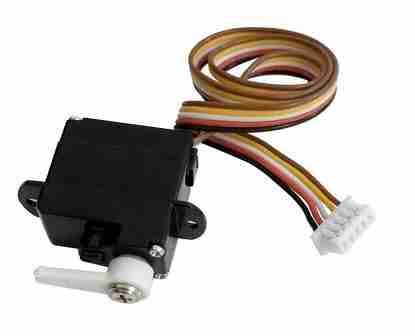 Building
Best Servos for Micro RC Airplanes
Best Servos for Micro RC Airplanes Thank you for visiting my blog on the top servos for mini...
 Flying
Gyro Control in Micro RC Airplanes
Gyro Control in Micro RC Airplanes Gyro control in Micro RC Airplanes is a technology that is used to provide...
 Building
Dollar Tree Foam vs Depron Foam
Dollar Tree Foam VS Depron Foam Micro RC airplanes are small scale models of real-life aircraft that...
 Building
Foam RC Planes for Beginners
https://youtu.be/Hs7QNKN4ec0Using Foam to Create AirplanesFoam Electric RC Plane Designs & PackagesThe majority of RTF RC planes at presents are foam,...
 Flite Test
Flight Test is Fantastic for RC Planes
What is the Flite Test? When two friends decided to develop a web-based radio-controlled aircraft exhibition, Flite Test was born...