
Longer Flight Times for the Flite Test EZ Pack
Bigger AmpHours/ Longer Flying Times
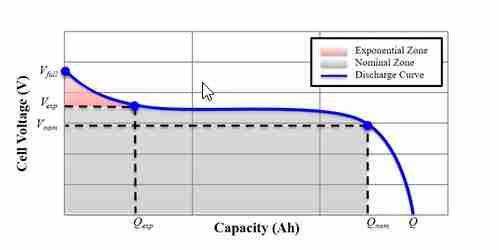
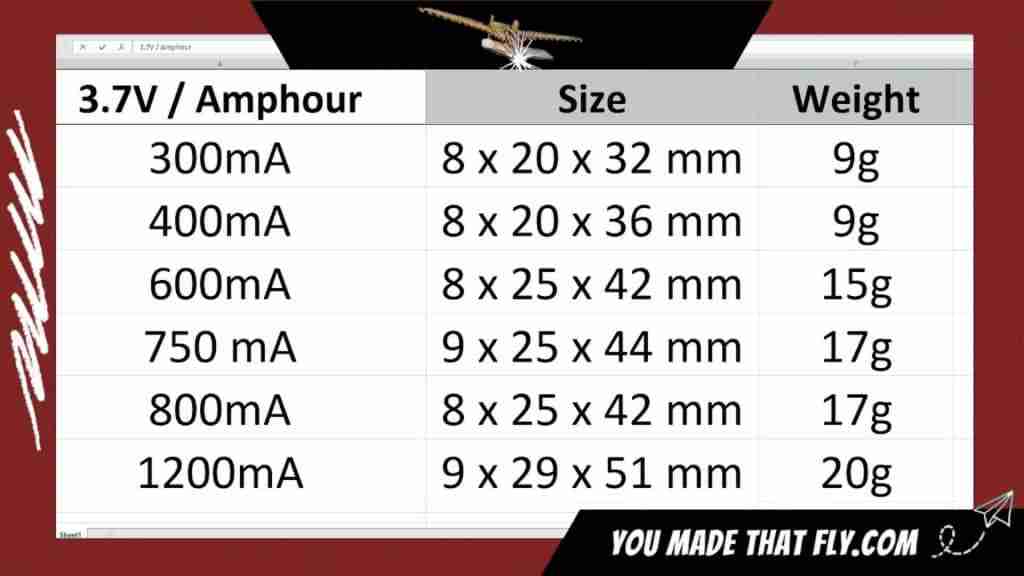
As the chart explains, bigger the capacity of the battery, longer the flight times. With Lithium Batteries the voltage is the same, 3.7volts, but the size or amperage of the cells vary. Lithium batteries have a great discharge pattern. They have a flat voltage for a very long period. The electronics in the FT EZ-pack sense when the voltage is getting too low and turn off the power to the motors. This leaves power enough for the receiver to still work long enough for you to land your plane.
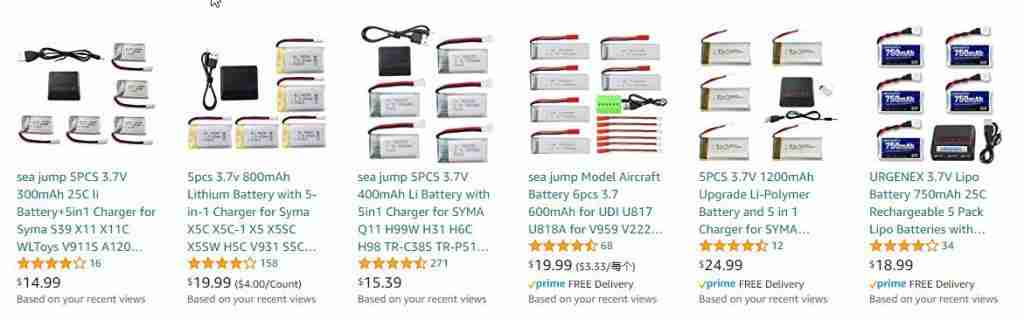
Fly longer in the EZ Pack from Flite Test. These batteries are compatible with the EZ Pack and can double, triple and even quadruple flight times. Try them out!
Bigger Batteries for the Flite Test STEM Airplanes
You can take this little battery that comes with a flight test sign, and you can replace it with a bigger battery. I didn’t know that was possible, but let’s find out more on you made that fly.
All righty. So the standard battery that comes with the flight test system, let’s go over to the overhead cam, cuz you know how I like to change cameras is a 3.7, 300 mil amp battery. But after extensive research, I found a number of batteries that can be substituted because they all have the same connector here.
And that’s the important thing. As long as they have this spade connector, we’re good as gold. Our first replacement is a 600 milli amp. Now the neat part about that is it fits in the same slot as the 300 milli amp with no sweat. As a matter of fact, these boys at, uh, flight test had actually made it so the, all the batteries will fit right in there.
So if we go to do our comparison chart on the big board, we see that they come in at about 11 grams more for the 1200 milliamp. That’s four times as large as the 300. So we already get seven to 10 minutes depending on your flying with the 300 milliamp. I get about 15 minutes of the 600 milliamp, a 1200.
We’re talking almost over 20 minutes of flying and the trade off is only five grams. So I think that’s a heck. Um, a, a compromise, because when you have a small plane like this, you know, weight is the king and all this thing, but this only weighs 50 grams. Remember our base is 72 off the flight test airlines.
So we’re still with way within our guidelines and what we said, what we can fly with. Now I will tell you the 300 milli amp flies, like a bat on this thing. As in it literally flies like a purpose because it’s a little tail heavy, cuz I put, we put the extra servo in the back, but with a 600, uh, milli amp, this thing flies straight as an arrow and it’s a lot of fun to fly.
You can see that this actually has very little difference. We can put it back in there and we have plenty of room for flying with our, our bigger battery. This actually flies better with the heavier battery, because it adds more nose, weight instead of just adding weight to it. We add battery and we fly almost 15 minutes on this bad boy, which is an amazing long time for this little plane.
And there is a difference, um, with a smaller battery. This will actually perform loops where at inside and outside loops. Whereas the heavier battery, eh, has a little more time, but is a very stable flyer. So it depends on what you’re looking for, stunts or stability. So as always, you know, make sure you subscribe like and do the rest to the channel.
In our future episode, we’ll check out the different electronics and also the different flight configurations we’re gonna do. And I’m working on a super secret project about what to do with that extra channel. This I know you’re gonna. I’ll give you a hint. It has something to do with this. Ooh, what is this?
Oh, don’t want to peak too soon. Next episode. Keep flying my friends.